Change the Narrative
I named this first blog post “Change the Narrative” to emphasize how important mental health is in our fitness journeys. So much of improving our performance and reaching our training goals comes down to what type of positive (or negative) motivation we receive before, during, and after a workout.
Now you may be thinking, “what does she know about motivation, I thought personal trainers always love to workout”. And you’d be dead wrong. I’ve had the days (or weeks) where I did not want to go to the gym. I had those runs, where every mile felt like pulling teeth (see picture below). And, I’ve done those workouts that felt so hard that I quit early. IT HAPPENS AND IT DEFINITELY SUCKS!

Me at mile 10 of the 2025 Toronto Waterfront Marathon, thinking “This was a terrible idea, why did I sign up for this”
What I’ve learned over the years is that getting stronger and faster also means changing the way we talk to ourself, about ourselves. While a trainer or coach might be able to get you to the session, you (and only you) can get yourself to the finish line. As Beyonce sings, “me, myself, and I, that’s all I got in the end”. So let’s change the narrative! Here’s my top three tips for how to nip negative self talk in the bud without falling into “toxic positivity”.
Don’t Lie. Telling yourself you fell great, when you actually feel like shit is not effective because your brain knows that what you are saying doesn’t connect with how your body’s experience. Instead of trickery, turn to a mantra that makes you feel focused and empowered. Here’s a great resource for some mantras that will quiet your brain and shift your focus or check out the great podcast episode below with Dr. Josephine Perry, a Chartered Sports Psychologist.
On this episode of the Five Miles Easy podcast, Dr Perry, talks about how to find your mantra and perform under pressure.
Smile. Eliud Kipchoge (the greatest marathoner in history) is known for smiling during the most painful moments of a race to relax his mind. And he’s right! Sports psychology studies show that athletes who smiled during a challenging activity, significantly lowered their rate of perceived exertion and consumed less oxygen. By smiling we send a neurochemical signal to our brain that says I’m happy to be here.
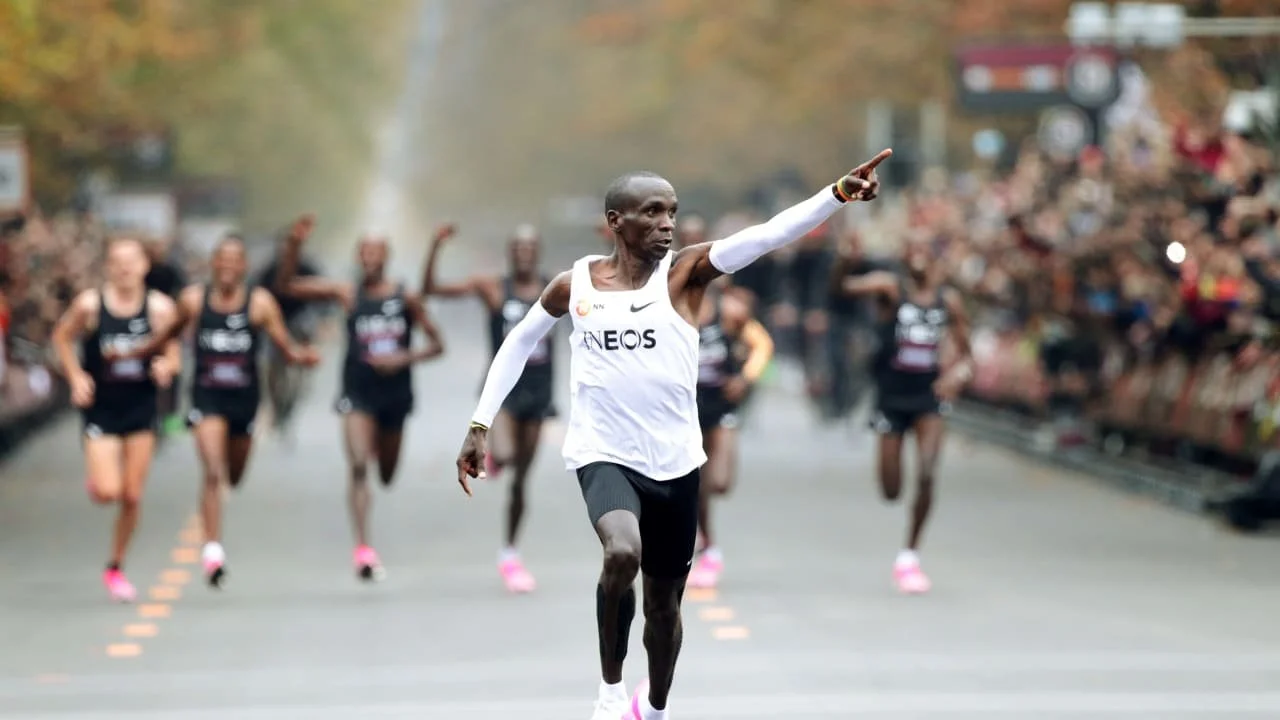
Kipchoge was the first runner to ever finish a marathon in under 2 hours. He’s pictured here during his record breaking race at the 2019 Vienna Marathon in Austria.
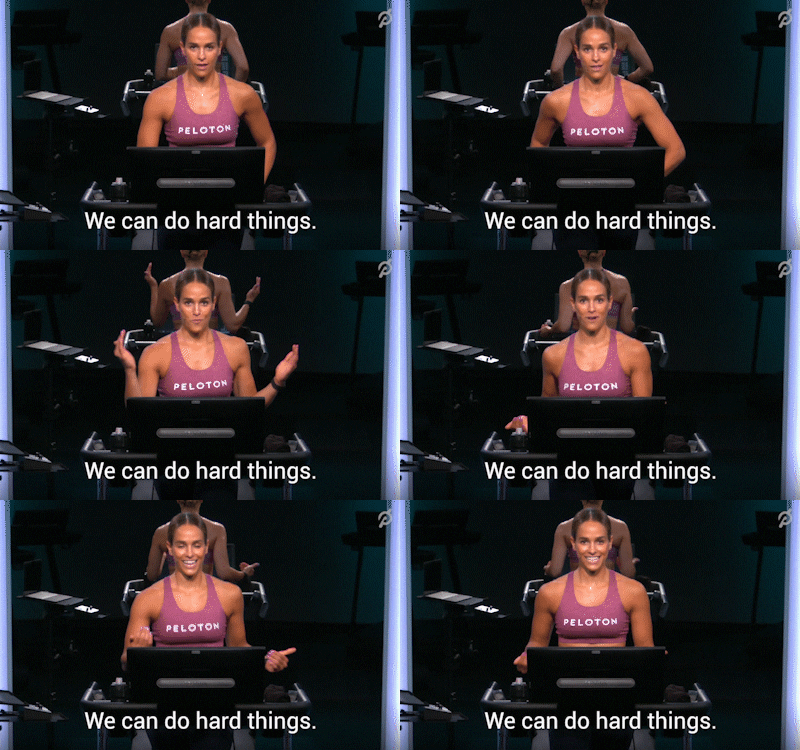
Find Evidence. There was likely a time when you completed a really hard workout or tackled a new challenge before the current moment of negativity you are sitting in. Go back to that memory and think about how you felt during the struggle and the sense of accomplishment you experienced at the end. This is a great reminder that as Peloton trainer Jess Sims says, “WE CAN DO HARD THINGS”.