
Why you should do squats every day
Squats are the ultimate lower body exercise. The fitness magic of this move comes from the fact that they are a compound or multi-joint movement that activates your quadriceps, glutes, hamstrings, calves, and core.
In addition to efficiently building lower body strength and increasing muscle definition, research suggests that squats can spark neuromuscular adaptations! By activating large muscle groups simultaneously, squats improve your nervous systems’ ability to recruit motor units. This trains your body to activate muscles faster and more effectively.
Research by Dr. Brad J. Schoenfeld and others in theJournal of Strength and Conditioning Research also show that squats improve coordination between the muscles in your lower body enhancing your explosive power. This means that squats will help you jump higher, lift more weight, and run faster.

Vogue India model performing proper squat form
Form Check
While squats may seem like a fairly strait forward exercise, there’s a couple of missteps that are easy to make while performing this move, especially, once you start to add heavier weights. To avoid these common mistakes, its helpful to perform squats facing sideways in front of a mirror so you can check in on your alignment. Here’s a couple of key things to look for:
The forward lean
The Misstep: A common mistake I see clients make all the time is leaning to far forward while in their squat. This happens when our core is struggling to maintain balance under tension, causing the torso to collapse forward. The result is that we end up putting a lot of tension on the lower back and short changing the quad and glute building benefits of the excise.
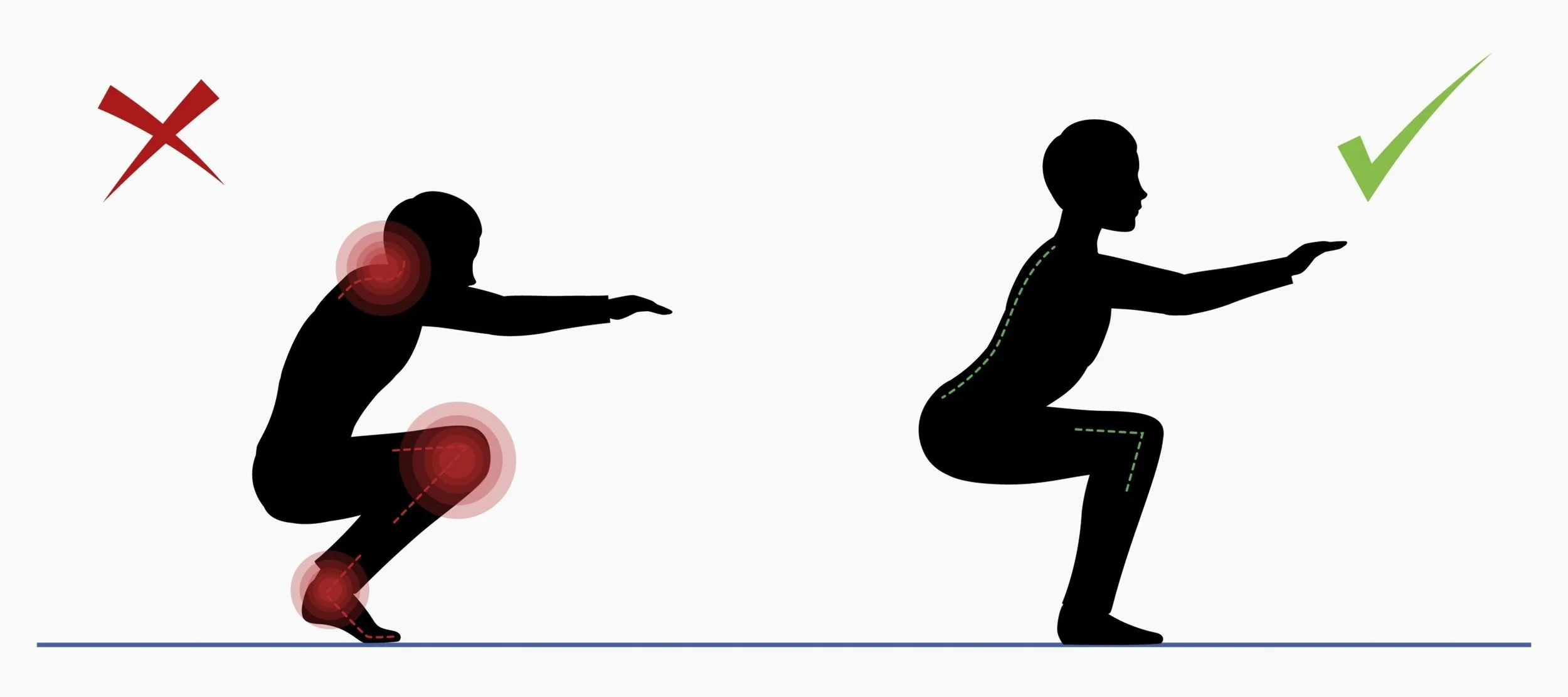
Image of incorrect and correct squat form from Barbell Medicine
The Fix:
Before you squat down, make sure to brace your core. One trick for doing this is to imagine that your abdomen is being wrapped in cellophane creating a tight feeling around your entire mid section.
As you initiate the movement, instead of going up and down, think about sitting back. You can mentally cue this by imagining (or actually standing next to) a wall and thinking about your hips moving backwards to touch the wall with your glutes.
Temporarily lower the weight that you are starting with while you build more core strength.
The knee collapse
The Misstep: Another issue that can often occur as you start to lower into your squat is that your knees will want to cave inwards (dynamic valgus). This is our bodies attempt to compensate for a lack of ankle mobility along with weak hip abductors and glutes. In seeking the path of least resistance, we end up actually putting more stress on the knees and reducing glute engagement.
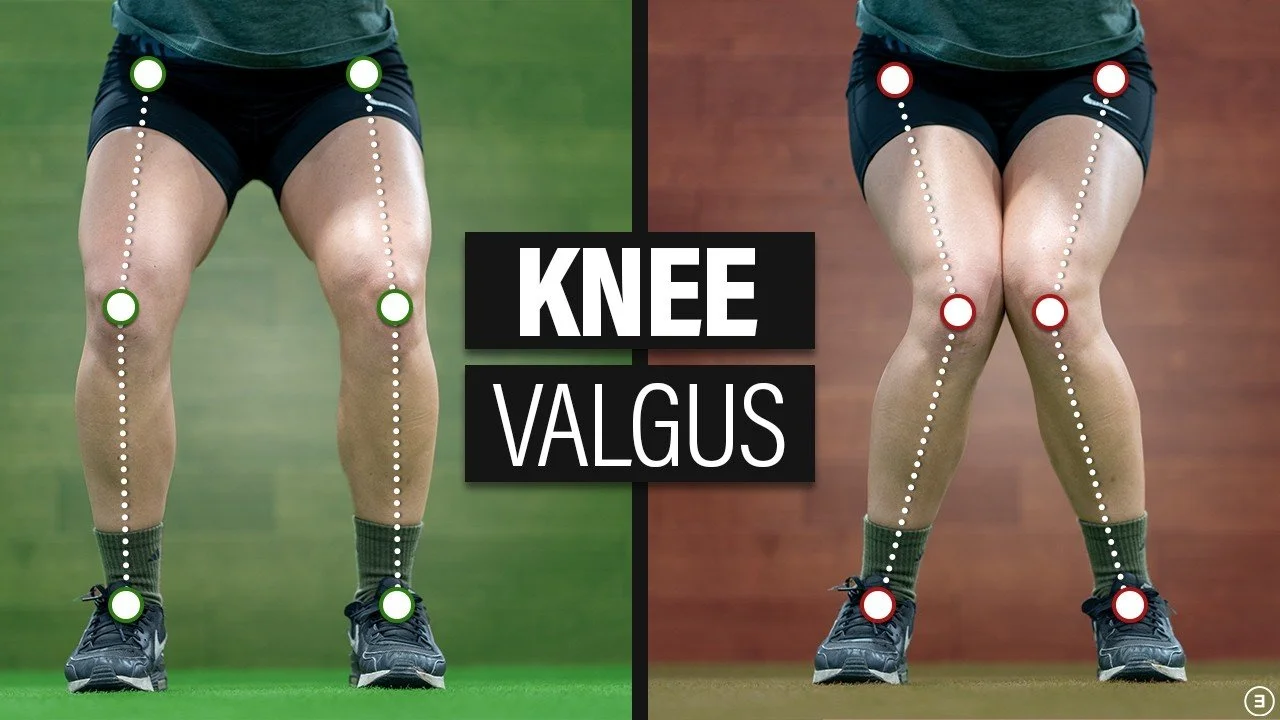
Still image of dynamic knee valgus from E3 Rehab
The Fix:
As you get into your squat, mentally cue yourself by thinking about pushing your knees outward towards your little toe.
Strengthen your glute medius muscles which play a big role in hip stabilization and knee control. Some good exercises for this include clam shells and side planks with leg lifts. You can take these moves to the next level by adding a resistance band.
Improve your ankle mobility by stretching calves muscles using a foam roller and working on dorsiflexion through exercises like toe raises and pointing/flexing foot while seated.
The early stop
The Misstep: One other common mistake that I often see at the gym is stopping too early in your squat progression. This can happen if the weight you’ve taken on is too heavy for your current strength capacity or if your hips are particularly tight. The result, less muscle activation and limited mobility development.
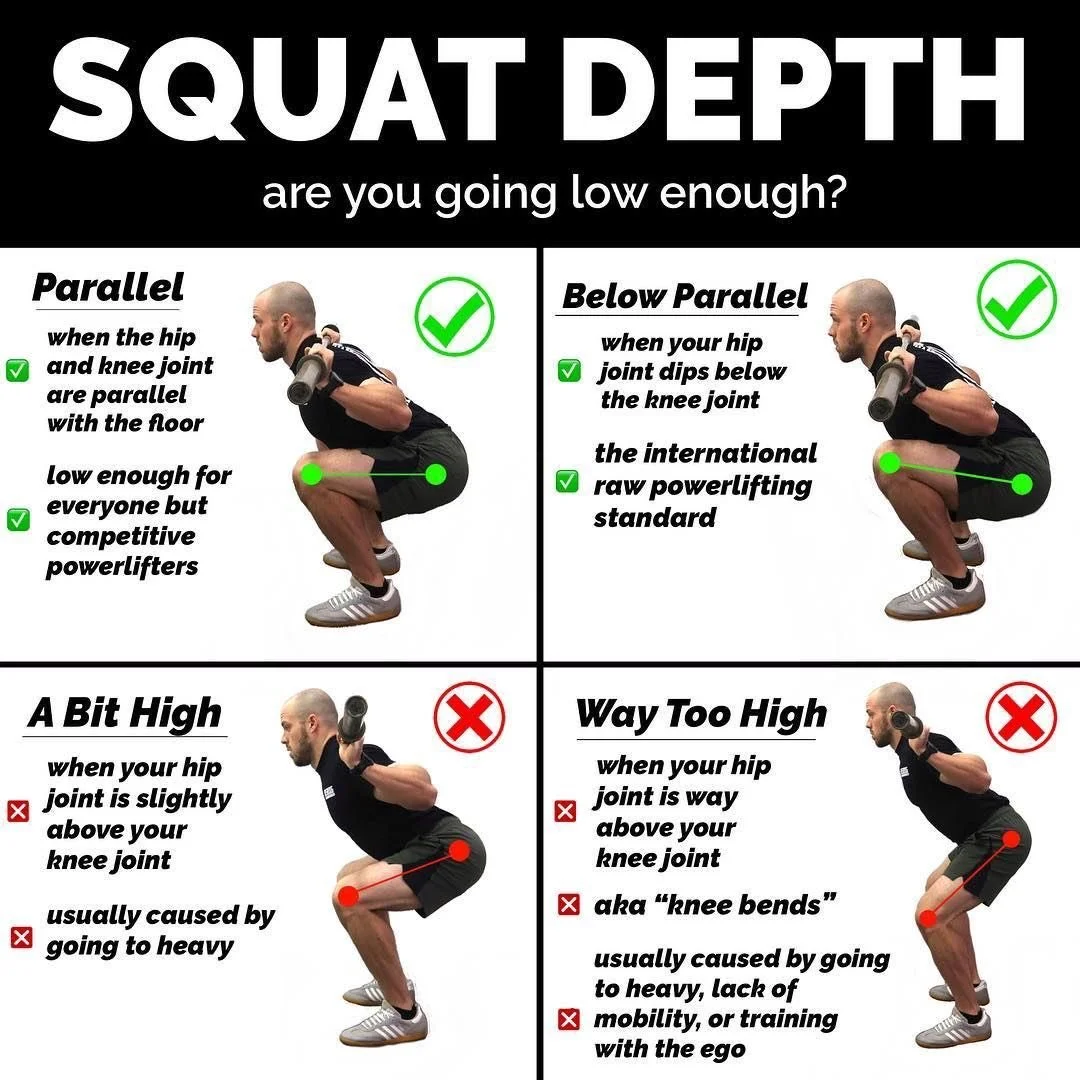
X Post by @FarmingtonPower demonstrating correct and incorrect squat depth form.
The Fix:
Before initiating the movement make sure your feet are wide enough apart and pointing straight forward. A narrow stance limits hip movement, creating a physical block that prevent depth. A good way to find the right position is to stand with your feet together and then move your feet out in a heal-toe-heal-toe pattern three times.
Open up your hips through static stretches like kneeling lunges, pigeon stretch, and figure four. Looking for more stretch inspiration, check out this great article reviewed by Dr. Sudhansu Singh for some ideas on how to address tight hip flexors.
The Performance Lab
Alright, so let’s try it out! While the classic squat is all you need to reap the benefits, there’s plenty of ways to spice up your lower body routine to keep things interesting. Here are three of my favorite squat variations.
Squat to Calf Raise
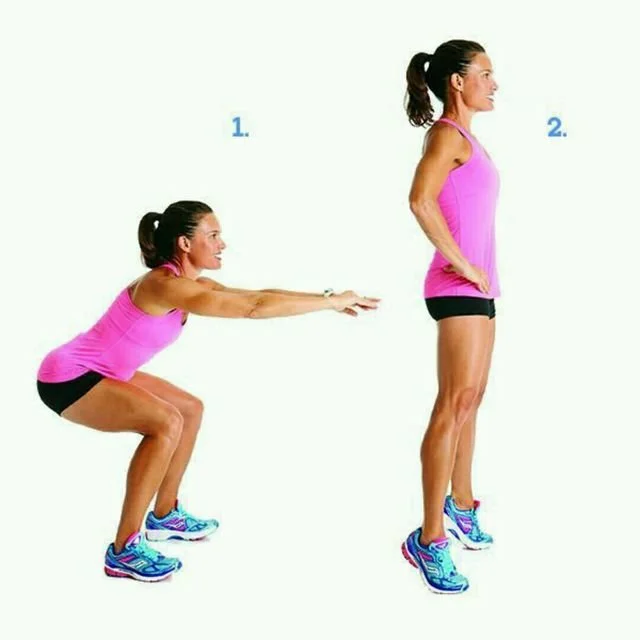
This compound exercise combines your standard squat with a calf raise at the top of the movement. By targeting your calves as part of this movement you get the added benefit of improving your balance and stability while training your core.
stand with your feet shoulder width apart
with chest up, shoulders back, and core engaged slowly bend your hips back keeping your knees tracking over your toes. This is a good time to remember that wall!
as you return to standing, lift your heels off the floor and rise onto the balls of your feet.
lower back to standing and repeat. I recommend 3 sets of 8-10 reps.
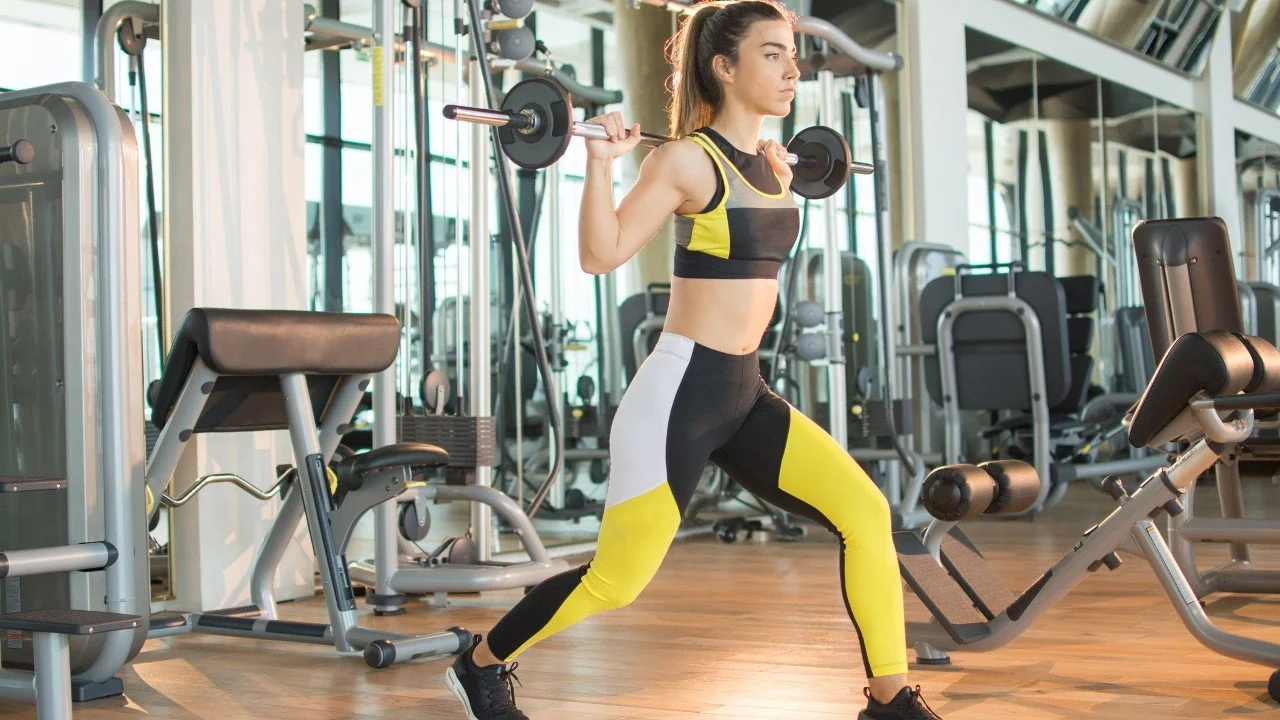
Split Squat
Looking for another coordination challenge, try split squats. By working one leg at a time, split squats ensure that both legs develop equal strength and stability and help correct potential imbalances between legs. Another added benefit is that split squat can be performed easily with dumbbells or bodyweight, which is great for folks with lower-back stress.
with feet hip-width apart step one foot forward and the other back, creating a staggered stance.
bend both knees, lowering straight down with front knee tracking over toes and back leg moving towards the floor.
once your back leg is hovering above the ground (no need to touch) push through your front foot and straighten legs.
Repeat 8-10 reps for 3 sets on each leg.
Jump Squats
Want to heat things up and get an extra cardio boost? Make your squats dynamic by adding an explosive jump! Not only will you get all the muscle growth benefits of a standard squat by incorporating plyometric-style movements into your routine you’ll build more power.
Get into your standard starting squat position with chest up, shoulders back, and core engaged.
Bend your hips and lower into a squat until your thighs are roughly parallel to the floor or as far as your mobility allows.
Driving through your heels and mid-foot jump up, swinging your arms upward to create momentum.
Stick the landing then repeat. I’d recommend 3 sets of 6-10 jumps with a 30 second rest between sets.
